You turn the key, and the front door sticks the way it always did. Then it hits you. The house still smells like them. Coffee. The soap by the kitchen sink. The cedar in the hall closet. Mom's reading glasses are on the side table where she left them. Dad's jacket is still on the hook.
The funeral is over. The relatives fly home Sunday. And somebody has to figure out what happens to everything in here.
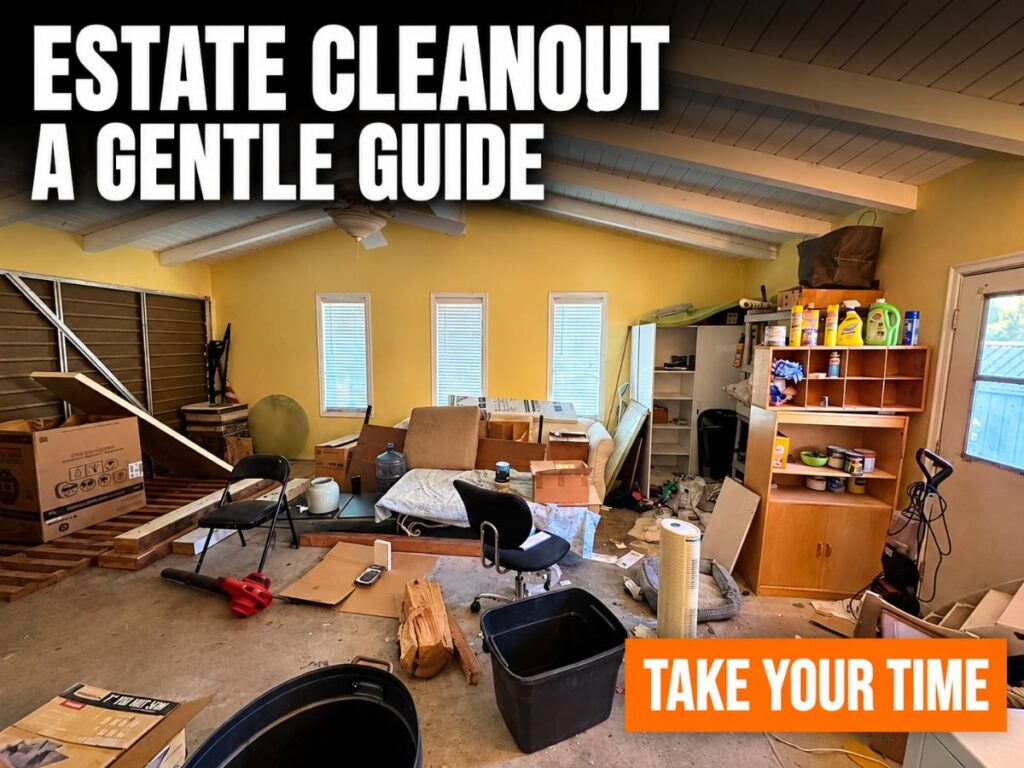
If that somebody is you, this is for you. An estate cleanout after death is one of the hardest jobs a family takes on, and almost nobody tells you how to start. So here's what we've learned from walking into a lot of these houses.
First, the thing most families need to hear. You are not throwing away a person. Clearing out the house doesn't erase anyone. The memories don't live in the bread maker or the stack of magazines in the garage.
What you're actually doing is deciding what to carry forward. A few things will come home with you. Some will go to people who loved them too. Some will go to strangers who can use them. And a lot of it will simply go. That isn't a betrayal. That's how a life gets handed off.
Once you see it that way, the question stops being "how do I get rid of all this?" and becomes "what matters, and who should have it?" That's a question you can answer, one room at a time.
How do you start an estate cleanout after death?
Don't rush unless you have to. Grief doesn't run on a schedule, and most decisions don't need to happen in the first week. But know which clock you're actually on. A house going on the market, a lease ending, a rental with a move-out date, family members who can only be in town for a few days. Before anything leaves the house, loop in whoever is handling the estate, whether that's an executor, a trustee, or the family's attorney. We're haulers, not lawyers, so take this as common sense and not legal advice: it's a lot easier to keep something than to get it back.
Secure the important stuff first. Before anyone fills a single bag, find the papers and the valuables. Wills, deeds, car titles, bank and tax records, insurance policies, keys, jewelry, and photos. Then check the odd places, because a lot of people tucked things away on purpose. Freezer bags in the actual freezer. Cash between the pages of a book. Envelopes in coat pockets. Something taped to the back of a drawer. Go slow on this first pass. It's the one part you can't redo.
Who gets what, and what about the things you can't keep?
Let family choose keepsakes first. Do this before anything is hauled, donated, or sold. Keep the system simple so it doesn't turn into a standoff in the hallway. Give each person their own color of painter's tape or stickers. Go one round at a time, one pick per person per round, and repeat until everyone is done. It feels a little formal. It also keeps the focus on the memories instead of who grabbed what.
Photograph the things you love but can't keep. The recliner Dad fell asleep in every Sunday won't fit in your condo. Take a good picture of it. Same with the workbench, the china hutch, the fridge covered in grandkid drawings. A photo keeps the memory without asking you to store the furniture. Some families turn these into a small photo book.
What happens to everything else?
Pick a path for the rest. Once the keepsakes are claimed, what's left usually falls into three groups. Items with real resale value, like antiques, art, quality furniture, or collections, are worth a call to an estate sale company. Usable everyday things, like clean furniture, kitchenware, linens, and tools, can go to donation. Everything else gets hauled: worn-out mattresses, broken appliances, expired pantry food, old paperwork you've already gone through. We explain how that sort works in Where Does Your Junk Actually Go?
You don't have to do it all in one trip. Partial cleanouts are fine. Clear the garage this month and the bedrooms next month. There's no prize for finishing in a weekend.
The honest part
Most of what's in a house after 40 years is not precious. It's the drawer with four decades of rubber bands, every one of them saved for a reason nobody remembers. It's the closet of clothes no one in the family will wear. That isn't disrespect. It's just what a life accumulates.
The precious things are usually a few boxes. The letters, the photos, the recipe cards in her handwriting, his watch. Hold onto those. Let the rest go without guilt. Keeping the whole house in storage doesn't keep the person. It only postpones the same decision.
Where STUFF comes in
STUFF Junk Removal is owned and run by Scott Patterson out of Agoura Hills. We've been hauling across LA and Ventura County since 2021, with real employees on payroll, all three insurance policies, and Scott's name on every truck.
We serve Calabasas, Westlake Village, Agoura Hills, Thousand Oaks, Newbury Park, and Oak Park, plus the rest of our LA and Ventura County service area.
We work around your family's timeline. We can take the whole house or only what you point to. If something turns up while we're loading (papers, photos, cash, jewelry), we set it aside and hand it back. Usable items get sorted for donation. And we treat the house like it's still someone's home, because it is. You get the exact price before we touch anything. If it doesn't feel right, we leave and you owe nothing.
Call 805-427-8833 whenever you're ready, or book online.
STUFF. Gone.